AGENTIC AI WORKFLOW IMPLEMENTATION
PHARMA DESIGN PROCESS
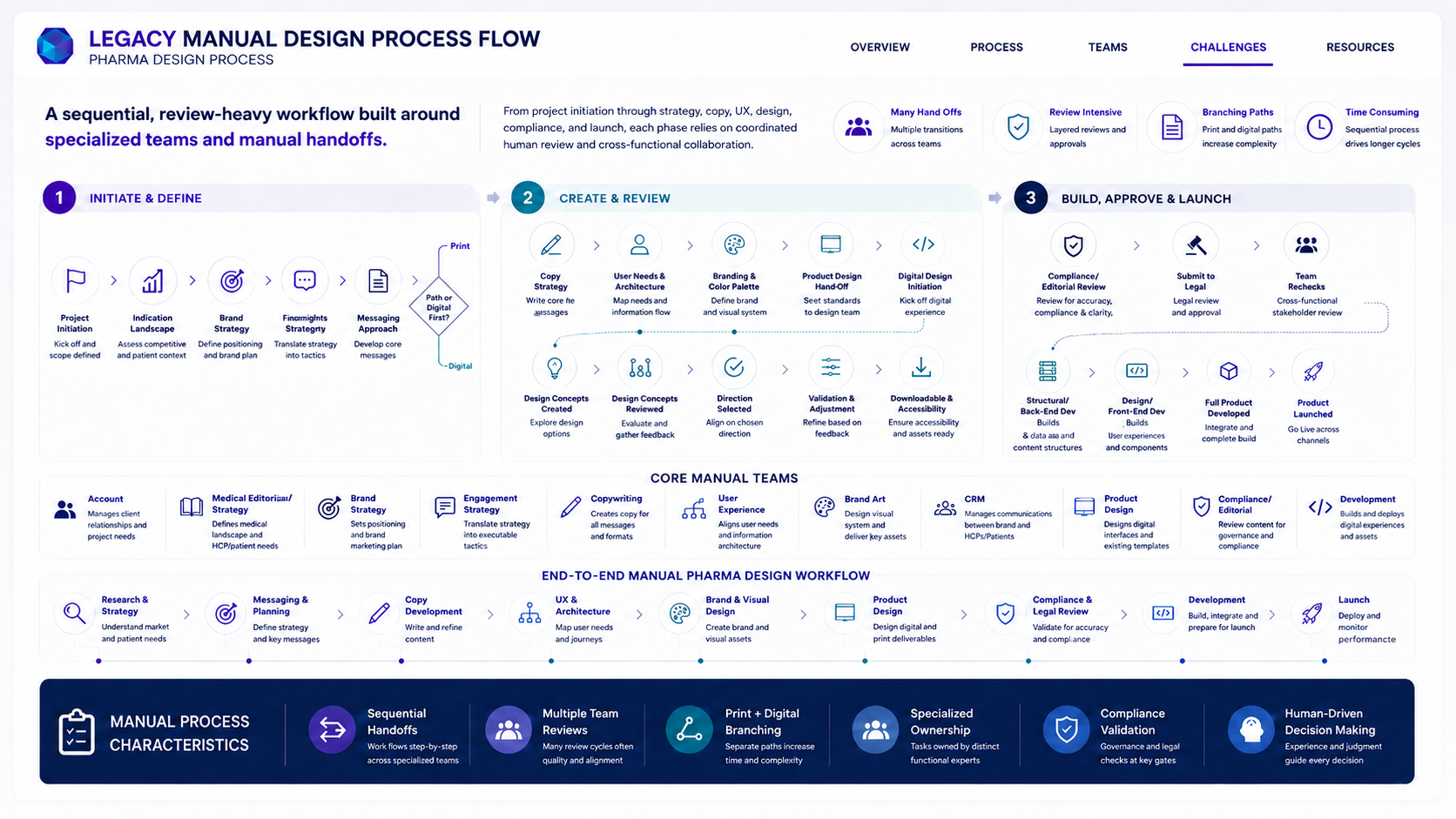
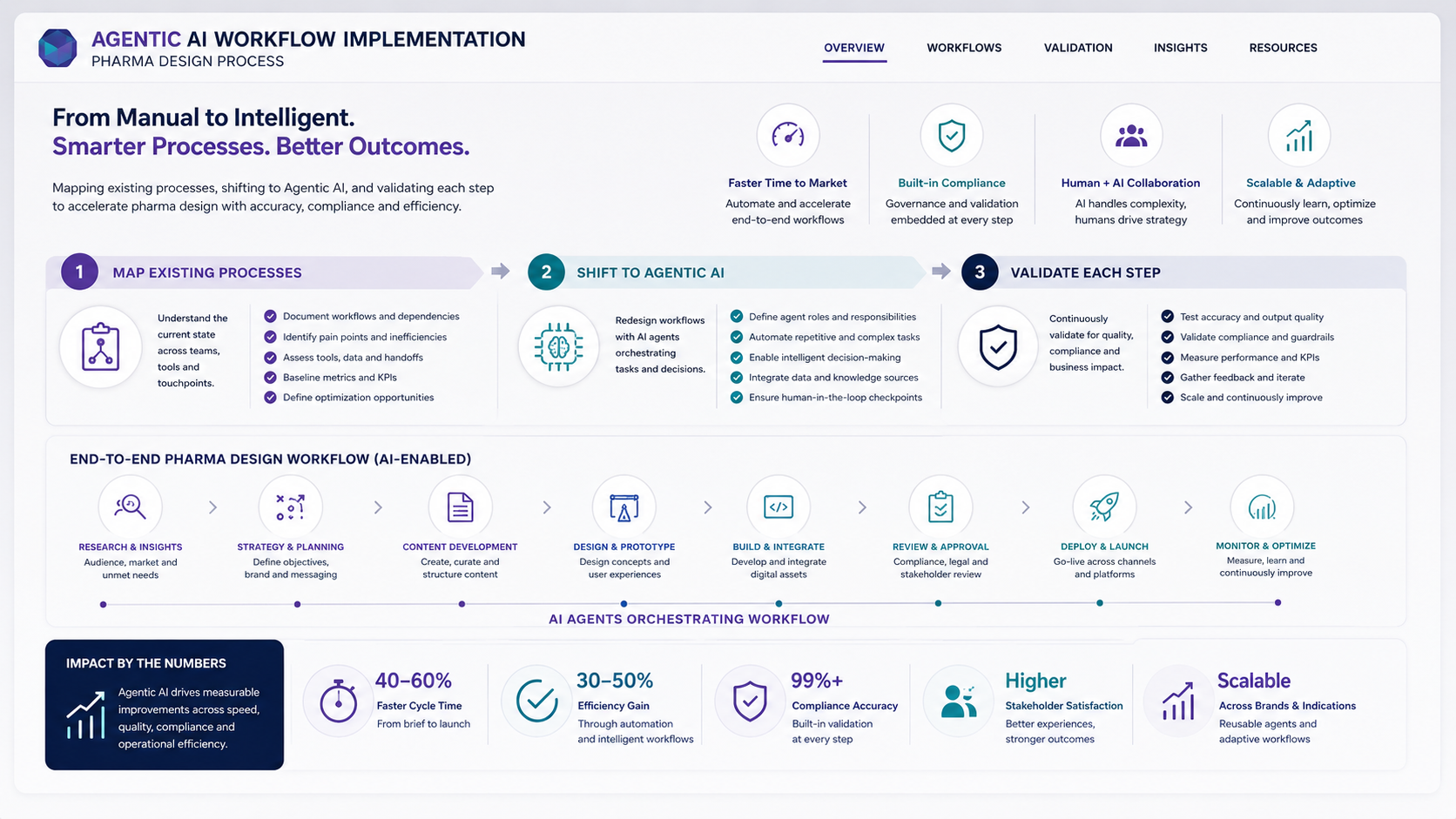
This project transformed a traditional pharmaceutical UX and campaign development process into an Agentic AI-enabled workflow designed to improve speed, scalability, governance, and collaboration across teams. By mapping existing processes, defining specialized AI agents, and embedding validation and compliance checkpoints throughout the system, the framework demonstrated how human expertise and AI orchestration could work together to streamline research, content creation, UX design, testing, accessibility, and launch activities in a regulated healthcare environment.
-
Traditional pharmaceutical design and marketing workflows are highly manual, sequential, and dependent on siloed teams, creating inefficiencies, longer production timelines, and increased compliance risk. As digital ecosystems became more complex, organizations needed a scalable framework that could streamline research, strategy, UX, content creation, governance, and validation—without sacrificing regulatory oversight or human expertise.
-
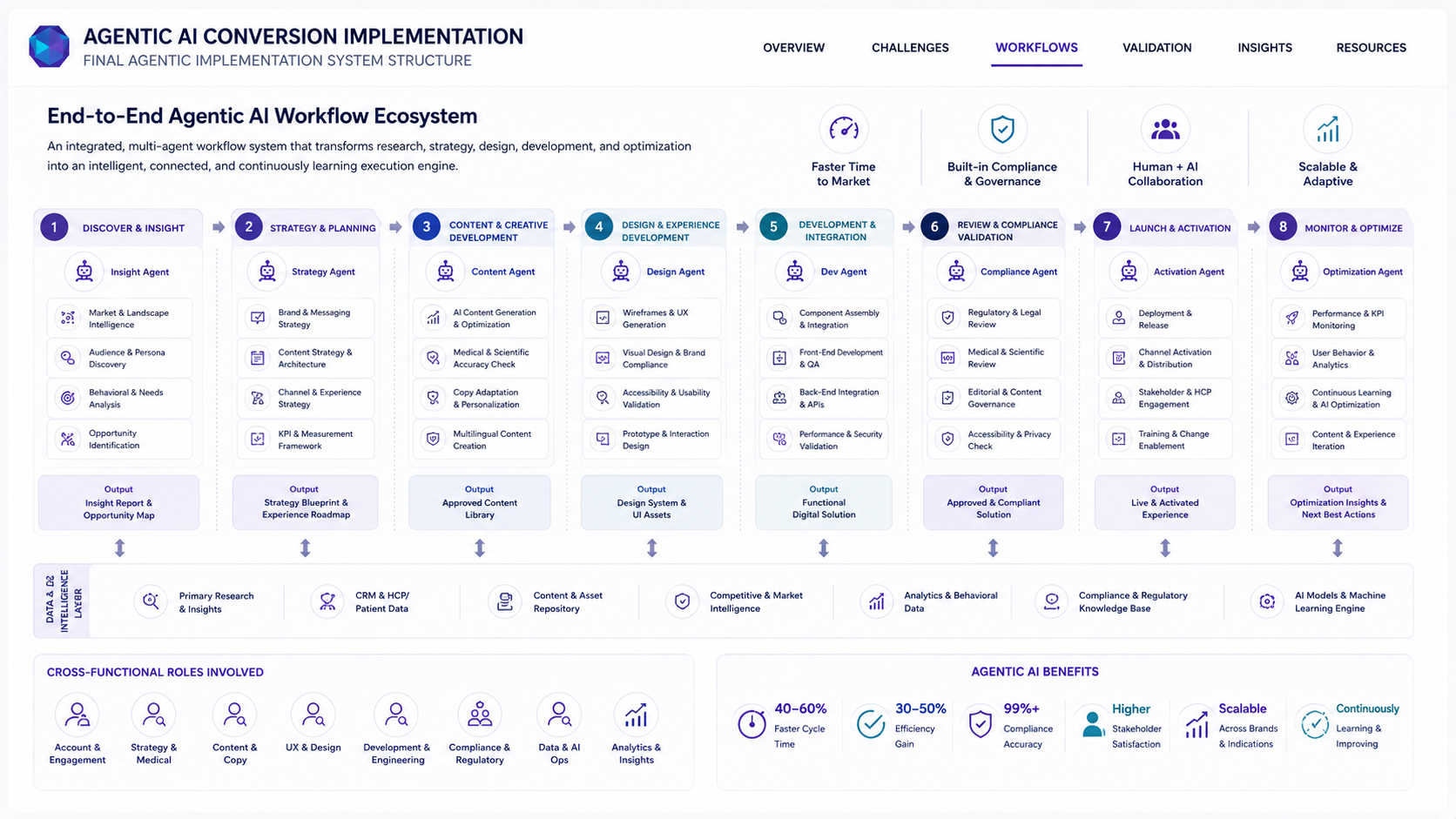
I developed an Agentic AI workflow framework designed to transform a traditional pharma UX and campaign development process into a coordinated system of specialized AI agents working alongside human stakeholders. The approach focused on mapping existing workflows, identifying decision points, defining agent responsibilities, integrating governance and validation layers, and structuring shared data systems that allowed AI agents to collaborate across research, strategy, UX, copy, design, accessibility, analytics, and compliance functions.
-
The project included documenting the current-state manual process, architecting the future-state Agentic AI ecosystem, and defining how individual agents would interact, validate outputs, escalate decisions, and share structured knowledge. I designed workflow models covering research synthesis, content architecture, UX design, testing, accessibility review, compliance validation, and performance monitoring, while also defining the supporting data sources, orchestration layers, governance controls, and human-in-the-loop review processes required for deployment in a regulated pharmaceutical environment.